

How to Maintain Your Smart Vending Machine for Peak Performance
Updated: Sep 25, 2025

Smart vending machines deliver 24/7 convenience if they’re maintained like the connected retail devices they are. This practical guide gives your ops team a simple, time-boxed routine to protect uptime, food safety, and payment success across mixed fleets (snacks, beverages, hygiene/OTC, and frozen). It also shows how Vendekin’s vNetra helps you move from reactive fixes to predictive care.
Vending Machine Maintenance: Daily Checklist (5–7 minutes)
Wipe touchpoints & screens: Use food-safe, non-abrasive cleaner; dry microfiber finish.
Cashless/payments quick test: Scan UPI QR with PhonePe/GPay, tap RFID staff card, confirm receipt.
Visual inspection: Doors close flush, no ice build-up, no product leaning out of spirals.
Out-of-stock flags: Refill fast-moving SKUs; follow FIFO for dated items.
Error lights & vNetra alerts: Acknowledge, create ticket if needed.
Weekly Tasks (15–20 minutes)
Sanitize dispense path & elevator/elevend tray: Prevent residue and packet tears.
Spiral/elevator test vend: 2–3 SKUs across shelves; check smooth drop/elevator placement.
UI/content check: Promo cards, pricing, and language settings are correct for the location.
Gasket wipe & door seal check: Keeps cold air in and power bills down.
Monthly Tasks (30–45 minutes)
Temperature calibration: Verify each zone set-point (e.g., beverages 2–6°C; frozen ≤-18°C). Log in vNetra.
Condenser dusting: Brush/vacuum fins; improves cooling and compressor life (extra important in summer/monsoon).
Firmware/OTA updates via vNetra: Apply security patches, device drivers, and UI improvements.
Planogram tune-up: Use sell-through data to increase facings for top SKUs; retire slow movers.
Cable & earth check: Look for frays/loose plugs; ensure dedicated grounded outlet.
Quarterly/Seasonal Deep Clean
Full cabinet clean: Shelves, guides, sensors, and drip tray; defrost if required.
Re-grease moving parts (as specified): Elevator rails, motor shafts only approved lubricants.
Health & safety audit: Update cleaning logs, expiry checks, and temperature records for compliance.
Temperature-Controlled & Frozen Care (Multi-Zone Best Practices)
Zone discipline: Don’t mix ambient SKUs into chilled rows or vice-versa; it confuses sensors and hurts cooling.
Door-open discipline: Keep loading windows short; stage refills in crates first.
Ice build-up watch: If you see frost on the evaporator, schedule a controlled defrost and log it.
Payment System Maintenance (UPI + RFID)
UPI QR health: Screen clarity matters clean glass; verify live QR cycles to PhonePe/GPay.
Reader resets: Power-cycle payment terminal monthly to clear caches; confirm settlement batches in reports.
RFID wallets: Test a sample of staff cards from different departments; re-map entitlements if roles changed.
Receipts & audits: Use vNetra to reconcile daily totals vs. bank settlements for faster finance closure.
Remote Monitoring with vNetra (From Reactive to Predictive)
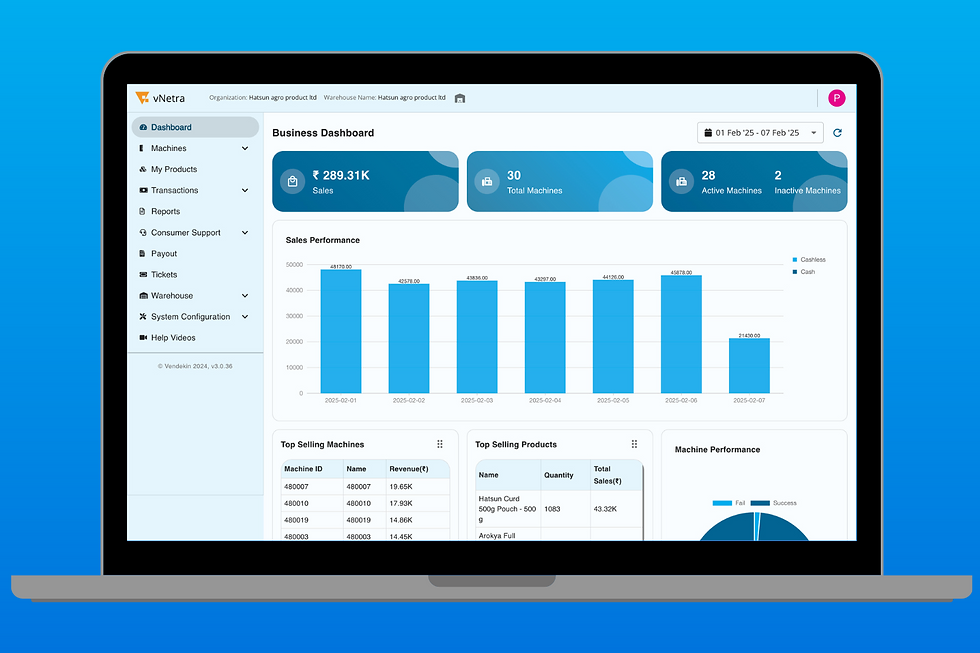
Live telemetry: Online/offline status, door events, temperature drift, motor errors see issues before users do.
Auto-tickets: Create service jobs directly from alerts; attach photos/notes from the field app.
Data-driven planograms: Heatmaps reveal dead space; A/B test facings and bundles without site visits.
OTA everything: Push price changes, promos, and firmware fleet-wide in minutes.
Troubleshooting Quick Fixes (Save a Service Call)
Item not dispensing: Check product alignment and spiral tension; test vend in Service Mode.
Reader shows error: Reboot terminal > check network > retry with PhonePe/GPay; raise ticket if EMV kernel error persists.
Cabinet warm: Verify door seal, condenser dust, zone set-points; listen for fan/compressor.
Frozen door stuck: Pause sales in that zone via vNetra; defrost cycle per SOP.
UI frozen: Soft reboot HMI; if recurring, apply pending OTA and log incident.
Your On-Site Spares & Consumables Kit
Microfiber cloths, food-safe cleaner, compressed air can, spare spirals/couplers, gasket strip, fuses, a tested RFID card, and a labeled brush for condenser fins.
AMC for vending machines: what your pack should cover
An AMC (Annual Maintenance Contract) stabilizes OPEX and locks in SLAs ideal for hospitals, campuses, and multi-site offices.
Typical inclusions:
Quarterly preventive maintenance visits (cleaning, electrical, refrigeration, payment module checks)
Priority response for breakdowns (e.g., 8 business hours in metros, 24 in Tier-2/3)
Remote diagnostics & proactive part replacement based on alarm trends
Consumables (gaskets, filters, desiccants) and labor covered; parts either included or discounted depending on tier
Uptime reporting and a quarterly performance review to optimize planograms and prices
Tip: Align AMC windows with your peak seasons (admissions, festival months) and agree on SLA credits if uptime falls below target.
Conclusion
Disciplined vending machine maintenance is the lowest-cost way to unlock higher revenue and longer asset life. A simple cadence (daily wipe-downs, weekly airflow and temperature checks, monthly firmware & hardware inspections) plus a well-structured AMC will keep your vending machine fleet cold, clean, connected—and profitable.


Comments